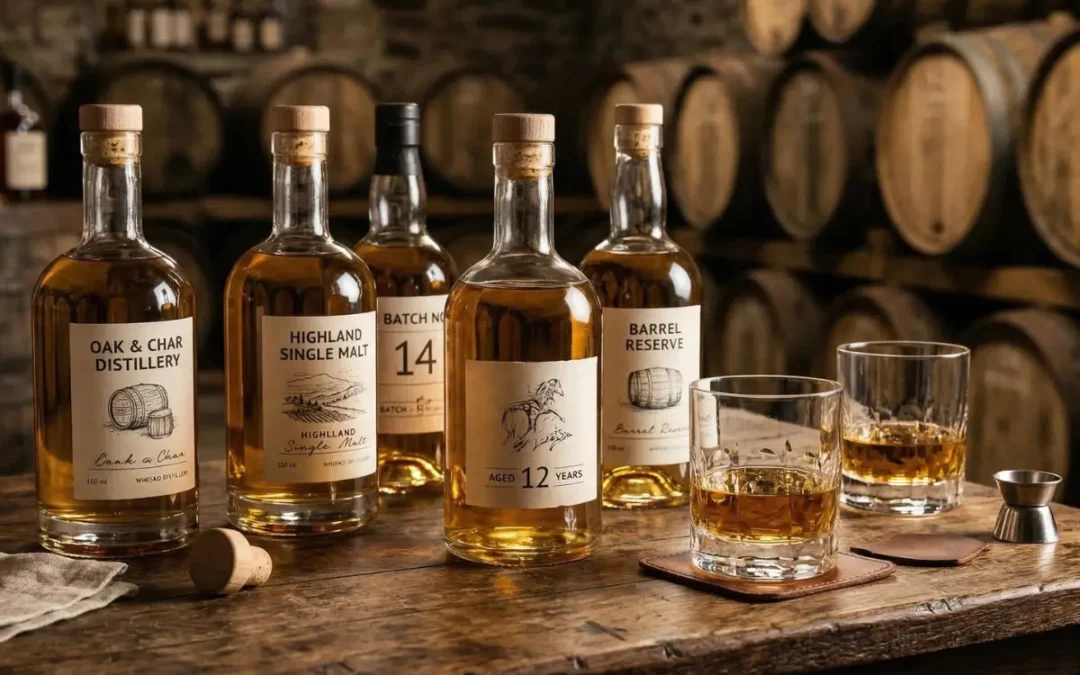
by HOS | Oct 9, 2026 | Whisky
Walk into a good bottle shop and the whisky wall can feel like a locked door. Hundreds of bottles, unfamiliar place names, mysterious numbers on the labels, and prices that range from a casual dinner to a month’s rent.
Most beginners grab whatever looks nice and hope for the best. There is a better way.
A little background goes a long way, and none of it requires a tweed jacket or years of practice. This guide explains what Single Malt Whisky is, how it is made, how to taste it, and how to pick a first bottle you will actually enjoy.
What the Label Really Means
The Short Definition
A malt of this kind is made at a single distillery from just three ingredients: malted barley, water, and yeast. That is the whole recipe.
Breaking Down the Words
- Single: every drop in the bottle came from one distillery.
- Malt: the grain is malted barley, not corn, rye, or wheat.
Why It Matters to You
Because it comes from one place, a malt tends to carry a recognizable house character. Blended whisky, by contrast, combines malt and grain whiskies from many distilleries to create a consistent, often milder, flavor.
Neither style is better. They simply offer different experiences.
How It Is Made
You do not need a chemistry degree, but knowing how Single Malt Whisky comes to life explains why bottles taste so different from one another.
Step 1: Malting
Barley is soaked so it begins to sprout, then dried. Some distilleries dry it over peat smoke, which is where smoky flavors come from.
Step 2: Mashing and Fermenting
The dried barley is ground and mixed with hot water to release sugars. Yeast then turns that sugary liquid into a low-strength, beer-like wash.
Step 3: Distilling
The wash is heated in copper pot stills, usually twice. The shape and size of the still influence whether the spirit comes out light and floral or heavy and oily.
Step 4: Maturing
The new spirit rests in oak casks. In Scotland, the law requires at least three years of aging, and many bottles rest far longer.
Maturation does most of the heavy lifting. The wood adds color, vanilla, spice, and dried fruit notes, while time softens the rough edges.
Meet the Scotch Regions
Scotland is the best-known home of Single Malt Whisky, and its regions give you a handy map for exploring. Think of them as flavor neighborhoods rather than strict rules.
Speyside
Home to the highest concentration of distilleries. Expect gentle, fruity, honeyed drams. This is the friendliest place for beginners to start with Speyside Whisky.
Highlands
A huge and varied region. Highland Whisky styles range from rich and malty to coastal and briny.
Islay
The smoke capital. Islay whisky bottles here are famous for peat, seaweed, and medicinal notes. Bold, divisive, and unforgettable.
Lowlands
Typically light, grassy, and soft. A quiet, easygoing style Lowland Whisky.
Campbeltown
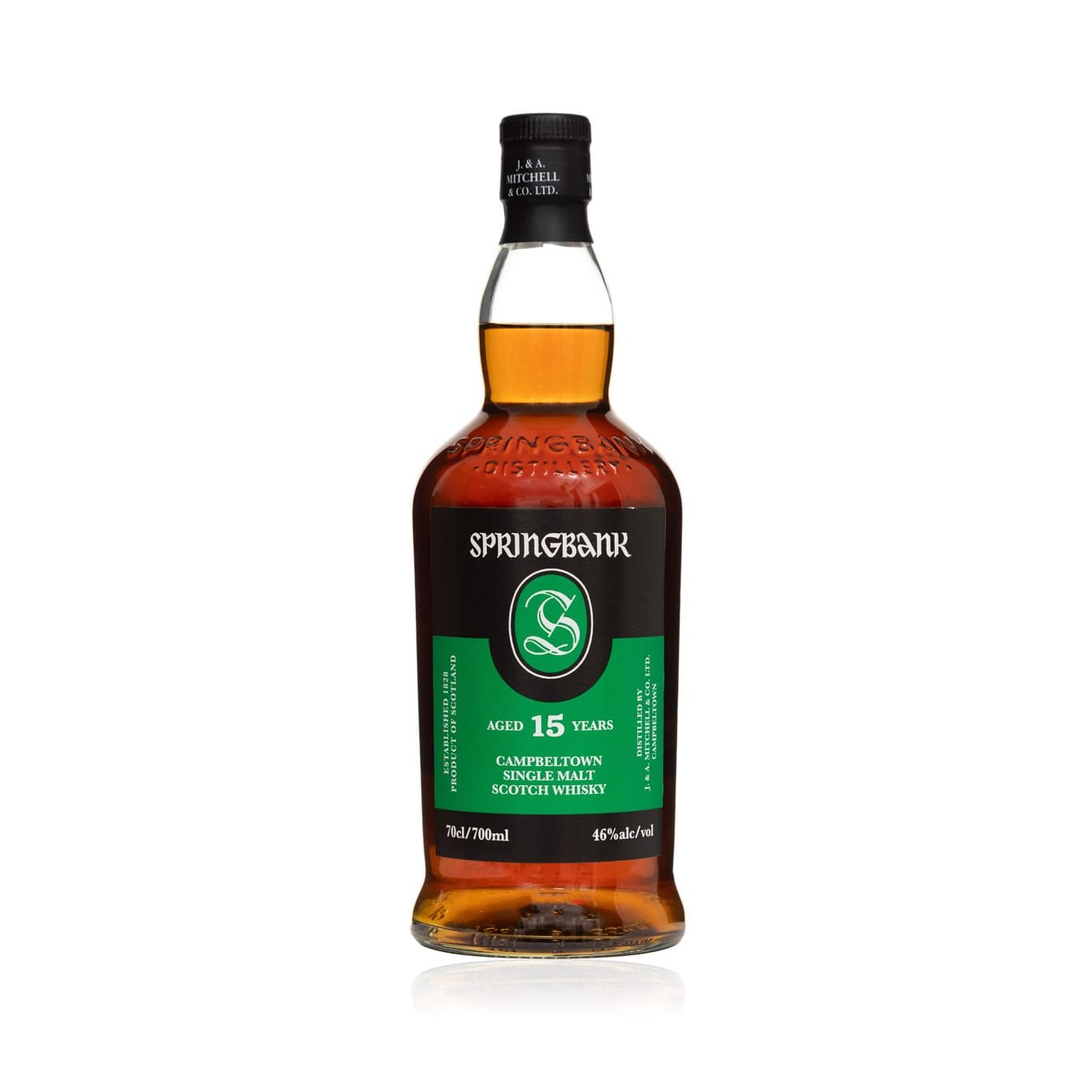
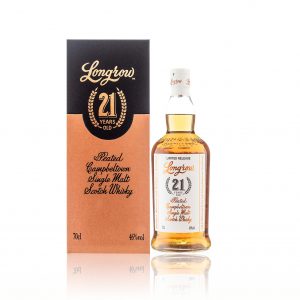
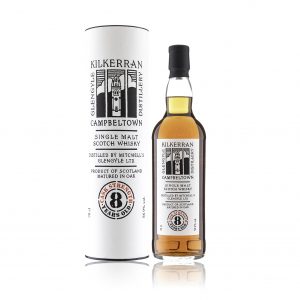
A tiny region with a reputation for salty, slightly funky, full-bodied Campbeltown Whisky.
The Islands
Not an official region, but a useful grouping. Expect Island Whisky’s mix of maritime character, gentle smoke, and spice.
Beyond Scotland
Japan, Ireland, the United States, India, Taiwan, and Australia all make excellent malt whisky too. Once you know your taste, these are rewarding places to explore. If you want to see how every major style fits together, this complete guide to whisky types is a handy next read.
Casks, Ages, and Other Label Clues
The wood shapes Single Malt Whisky as much as the stills do, so a few label clues are worth learning.
Ex-Bourbon Casks
These tend to add vanilla, caramel, and coconut. Light and sweet.
Sherry Casks
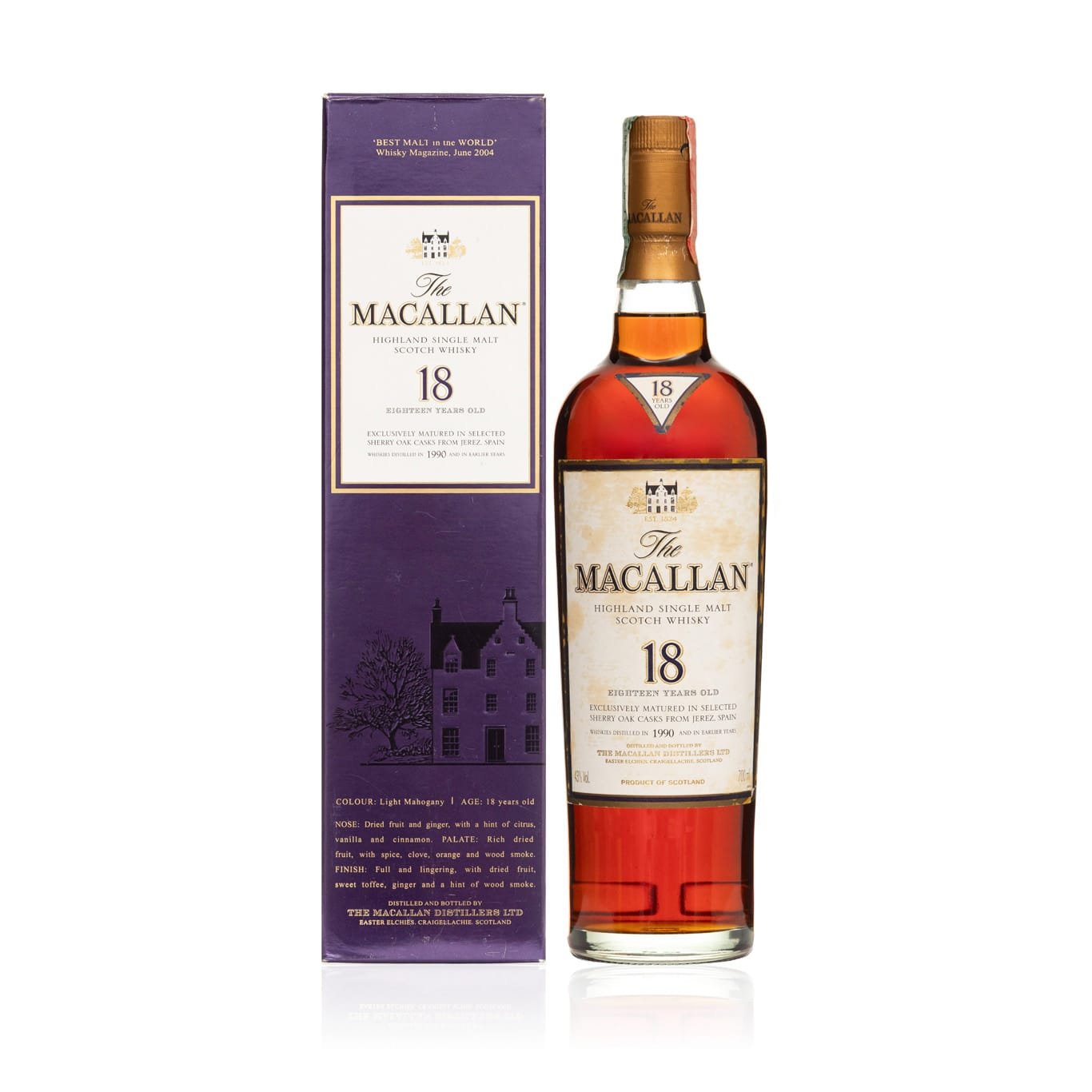
These bring dried fruit, nuts, chocolate, and baking spice. Rich and deep.
Reading the Age Statement
The number on the bottle is the age of the youngest whisky inside. A 12 year old contains nothing younger than twelve years, though older whisky may be mixed in.
Older does not automatically mean better. A well-made 10 year old can beat a tired 25 year old, and price rises sharply with age.
No Age Statement Bottles
Some bottles skip the number and focus on the cask or flavor instead. These can be excellent value, so do not dismiss them.
Other Terms Worth Knowing
- ABV: alcohol by volume. Most bottles sit between 40% and 46%.
- Cask strength: bottled without dilution, so expect much higher strength.
- Non-chill filtered: less filtering, which many drinkers feel preserves texture and flavor.
- Natural color: no caramel coloring was added.
How to Taste Whisky Properly
Tasting Single Malt Whisky is not a test. It is simply paying attention for a few extra minutes.
Choose the Right Glass
A tulip-shaped glass, or a Glencairn, concentrates aromas. A tumbler works if that is all you have.
Step 1: Look
Hold the glass to the light. Pale straw suggests lighter casks, while deep amber hints at sherry influence.
Step 2: Nose
Bring the glass near, not into, your nose, and breathe gently. Try with your mouth slightly open to avoid being overwhelmed by alcohol.
Step 3: Sip
Take a small sip and let it coat your tongue. Notice sweetness, spice, fruit, smoke, and how long the flavor lingers.
Step 4: Add Water
A few drops can open up aromas and soften the heat. Add a little at a time and see what changes.
Neat, Water, or Ice?
There is no wrong answer. Many enthusiasts begin neat with a drop of water, while others prefer a single large ice cube in warm weather. Drink it the way you enjoy it.
Choosing Your First Bottle
You do not need to spend a fortune. A reliable mid-range bottle teaches you far more than an expensive trophy you are afraid to open.
If You Like Sweet and Fruity
Look at Speyside bottles such as Glenfiddich 12, The Glenlivet 12, or Balvenie DoubleWood 12.
If You Like Something Balanced
Try a Highland or Island bottle such as Glenmorangie 10 or Highland Park 12.
If You Like Smoke
Start with a classic Islay such as Laphroaig 10. Be prepared: it is bold.
Smart Buying Tips
- Buy a smaller bottle or a sample set to explore before committing.
- Ask staff at a specialist shop what they enjoy at your budget.
- Taste in a bar first when you can.
- Avoid judging by packaging alone.
Myths Worth Dropping
“Real Drinkers Never Add Water”
Plenty of distillers and blenders add water when they taste. Do what helps you notice more flavor.
“Whisky Is Only for Special Occasions”
A modest pour of Single Malt Whisky on an ordinary evening is perfectly fine. Good whisky is meant to be enjoyed, not saved forever.
“Smoky Means Bad”
Peat is a style, not a flaw. Some people love it and others do not, and both reactions are valid.
“You Need an Expert Palate”
You only need curiosity. Vocabulary grows with practice, and your own descriptions are the ones that matter.
Easy Food Pairings
Pairing is a fun way to learn what you like. Keep it simple.
- Dark chocolate: brings out sherry cask richness.
- Aged cheddar or blue cheese: balances sweetness and spice.
- Smoked salmon: a classic partner for peated bottles.
- Fresh fruit and nuts: a light match for gentle, fruity drams.
Common Beginner Mistakes
Rushing
Whisky rewards patience. Give each dram a few minutes in the glass.
Chasing Age and Price
A higher number does not guarantee a better match for your taste.
Giving Up After One Bottle
If one style disappoints, try another region. Preferences shift over time.
Ignoring Storage
Keep bottles upright, away from sunlight and heat. An opened bottle of Single Malt Whisky will keep happily for a long time, though it can slowly lose vibrancy once the level drops very low.
A Simple Starter Plan
Want a structured way to begin? Try this:
- Pick three bottles from three different regions.
- Taste them on the same evening with water and a plain cracker.
- Write one line about each: sweet, smoky, fruity, spicy.
- Note which one you reach for again.
That small experiment will teach you more than a dozen reviews.
Keep a Simple Tasting Journal
Jot down the name, region, age, price, and a few flavor words for every bottle you try. After five or six entries, patterns appear: perhaps you love sherry sweetness, or maybe you lean toward coastal, briny styles.
Those notes make future shopping faster and cheaper. You will know exactly what to look for, and what to skip, when the next bottle catches your eye.
Join a Tasting or Visit a Distillery
Local tastings let you sample several drams without buying full bottles. Distillery tours show the stills and warehouses in person, and they are a memorable way to connect the process to the flavor in your glass.
Final Thoughts
Learning about Single Malt Whisky is less about memorizing facts and more about trusting your own senses. Start with a friendly bottle from our exclusive collection of Single Malt Whisky, taste slowly, and let curiosity guide each purchase.
Your first pour is only the beginning. Enjoy the journey, one dram at a time.
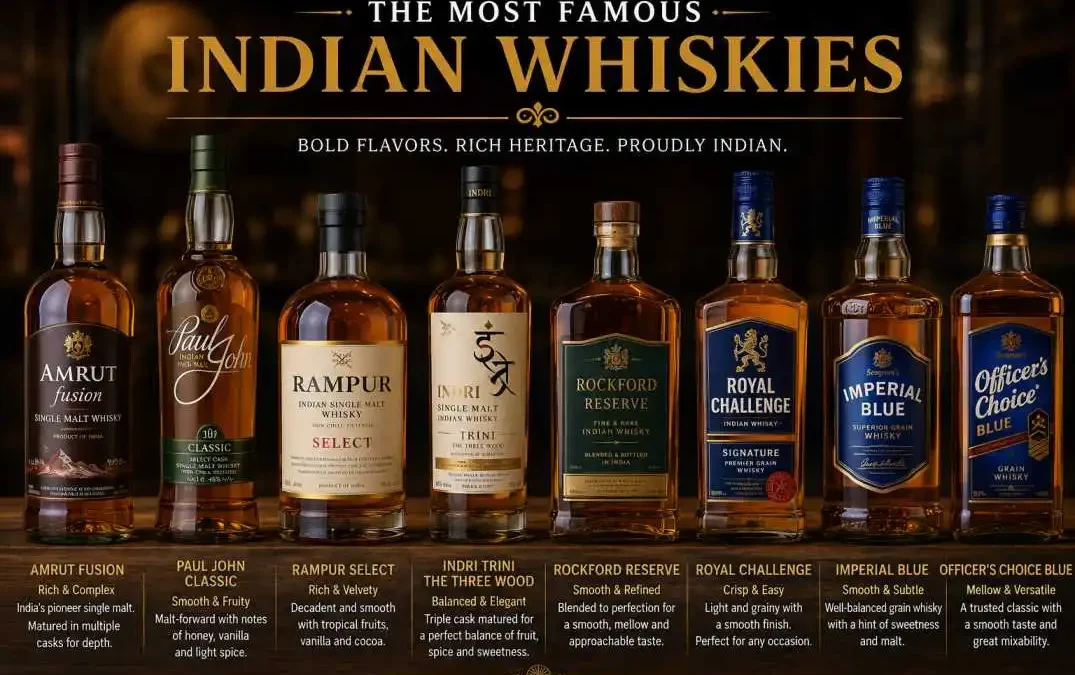
by HOS | Sep 18, 2026 | Whisky
Walk into any well-stocked bar today and you’re likely to find a bottle of Indian Whisky sitting confidently next to Scotch, bourbon, and Japanese blends. That wasn’t always the case. For decades, whisky lovers outside South Asia barely acknowledged India as a serious producer. Today, that perception has flipped entirely — and if you’re just starting to explore this category, there’s a lot more nuance here than most people expect.
This guide breaks down what Indian Whisky actually is, how it’s made, and what to look for as you start building your own understanding of the category.
What Exactly Is Indian Whisky?
The term covers more ground than many newcomers assume. Historically, a large portion of what’s labeled whisky in India was actually made from molasses — a byproduct of sugarcane — rather than grain. This distinction matters because, under the strict definitions used in places like Scotland, a molasses-based spirit wouldn’t legally qualify as whisky at all.
However, the more recent wave of premium Indian Whisky has shifted the conversation entirely. A growing number of distilleries now produce grain-based single malts using barley, following production methods closely aligned with traditional Scotch whisky techniques. This shift is a major reason the category has earned serious international respect in the last two decades.
Molasses-Based vs. Grain-Based: The Core Distinction
Understanding this split is the single most useful thing a beginner can learn.
Molasses-Based Whisky
- Made from sugarcane molasses, similar in raw material to rum
- Typically more affordable and widely consumed domestically
- Often blended with a small percentage of imported Scotch for flavor complexity
Grain-Based Whisky
- Made from malted barley, following traditional single malt production methods
- Aged in oak casks, often for several years
- The category responsible for India’s rising international reputation
If you’re new to exploring this whisky, starting with a grain-based single malt will give you the clearest picture of what the category is capable of at its best.
Why India’s Climate Changes Everything
One of the most fascinating aspects of Indian whisky production has nothing to do with ingredients — it’s about geography. Much of India’s whisky is distilled and aged in regions with significantly hotter climates than Scotland’s cool, damp conditions.
The Angel’s Share Effect
- In Scotland, distillers lose roughly 2% of a cask’s volume to evaporation each year
- In parts of India, that evaporation rate can climb to 10% or more annually
- This accelerated interaction between spirit and wood means this whisky matures faster than its Scottish counterparts
Practically speaking, a whisky aged for just four or five years in India can develop a depth and complexity that might take twice as long to achieve in a colder climate. This is part of why age statements don’t carry the same weight when comparing it to Scotch — the numbers simply aren’t measuring the same maturation process.
Getting to Know the Category’s Structure
Before diving into specific bottles, it helps to understand where Indian Whisky fits within the broader world of whisky styles. Because the category blends elements of both traditional Scotch-style production and unique regional influences, newcomers sometimes struggle to place it. For anyone wanting a broader foundation before narrowing in on India specifically, this complete guide to whisky types offers a useful overview of how different whisky categories are classified and where regional styles diverge.
With that broader context in mind, Indian single malts become easier to appreciate on their own terms rather than through a purely Scotch-comparison lens.
What to Expect on the Palate
Flavor profiles vary significantly depending on production style, but there are some recognizable characteristics that show up frequently in premium Indian expressions.
Common Flavor Notes
- Rich dried fruit and honey, often more pronounced than in cooler-climate whiskies
- Warm spice notes, sometimes echoing the region’s culinary influences
- A fuller, oilier mouthfeel due to accelerated cask interaction
- Occasional smoky or peated expressions, depending on the distillery’s style
Because of the faster maturation process discussed earlier, many Indian whiskies deliver a boldness and richness that can feel unexpectedly mature for their stated age.
How to Start Tasting Indian Whisky as a Beginner
If you’re ready to explore the category for yourself, you can browse our Indian whisky selection to discover grain-based single malts and other expressions from India, with options suited to different tasting preferences and budgets.
A Practical Approach
- Start with a well-reviewed single malt in the mid-price range to establish a baseline
- Taste it neat first, then with a small amount of water to open up the aromatics
- Compare it against a Scotch single malt of similar age to notice the climate-driven differences
- Take notes on sweetness, spice, and mouthfeel to track your preferences over time
This kind of side-by-side comparison is one of the fastest ways to understand what makes this whisky distinct rather than simply “similar to Scotch.”
Common Misconceptions Worth Clearing Up
A few myths tend to follow this category, even among casual whisky drinkers.
Myth: All Indian Whisky Is Made From Molasses
This was largely true decades ago, but premium grain-based single malts have become a significant and rapidly growing part of the industry.
Myth: Indian Whisky Can’t Compete With Scotch
International blind tastings and awards over the past several years have repeatedly challenged this assumption, with Indian expressions winning recognition against long-established Scotch competitors.
Myth: Age Statements Mean the Same Thing Everywhere
As covered earlier, the accelerated maturation caused by India’s climate means direct age comparisons with Scotch can be misleading.
Where the Category Is Headed
The momentum behind Indian Whisky shows no signs of slowing. Distilleries are investing in new production facilities, experimenting with regional grain varieties, and increasingly targeting export markets that were previously dominated by Scotch and Japanese producers. For a category that was largely overlooked internationally just twenty years ago, that trajectory says a lot about where things are headed.
Final Thoughts for New Explorers
Understanding Indian Whisky isn’t about memorizing brand names — it’s about grasping the production methods, climate influences, and flavor characteristics that make the category genuinely distinct. Once those fundamentals click, exploring specific bottles becomes far more rewarding, because you’ll actually understand why a given whisky tastes the way it does rather than just whether you like it.
Whether you start with a grain-based single malt or a more traditional blended expression, approaching it with curiosity rather than comparison to Scotch will lead to a much richer appreciation of what the category has to offer.

by HOS | Sep 11, 2026 | Whisky
Planning a dinner party menu usually starts with food, but the drinks list deserves just as much thought. If you want to impress guests without reaching for the same predictable bottle of Scotch, Taiwanese whisky is one of the most exciting choices on the table right now. It’s bold, it’s award-winning, and most importantly — it’s still a conversation starter for many drinkers.
This guide walks you through everything you need to serve it with confidence at your next gathering.
Why Taiwanese Whisky Fits a Dinner Party So Well
Taiwan’s subtropical climate accelerates whisky maturation dramatically compared to traditional whisky regions like Scotland. Barrels breathe faster in the heat and humidity, pulling more flavor from the wood in a shorter time. The result is a whisky that tastes rich and layered even at a younger age.
For hosts, this translates into a few practical advantages:
- Approachable flavor profiles that don’t intimidate casual drinkers
- Strong visual presentation, since many bottles feature striking, gift-worthy packaging
- A built-in story to share with guests who ask “what is this?”
Few spirits double as both a great pour and a great icebreaker.
Understanding the Flavor Profile Before You Buy
Taiwanese whiskies tend to lean fruity, tropical, and slightly spiced rather than smoky or peaty. Expect notes like:
- Ripe mango or pineapple
- Honey and vanilla from cask interaction
- A gentle warmth from cinnamon or clove
- A rounded, almost syrupy mouthfeel
This makes it a flexible pairing partner for a wide range of dinner party menus, from citrus-forward appetizers to rich, spiced desserts.
If your guest list includes people newer to whisky in general, it helps to know how Taiwanese expressions compare to other major styles before you commit to a bottle. This complete guide to whisky types breaks down the differences across Scotch, Bourbon, Irish, and Japanese whisky, which makes it easier to explain to your guests why Taiwanese whisky tastes the way it does.
Choosing the Right Bottle for the Occasion
Not every dinner party calls for the same bottle. Match your selection to the vibe you’re going for.
For a Casual Get-Together
Look for an entry-level single malt with a lighter, fruit-forward profile. These are easy to sip on their own and won’t overwhelm guests who aren’t regular whisky drinkers.
For a Formal Dinner
Choose a cask-strength or limited-edition release. These tend to have more depth and complexity, making them better suited for slow sipping after the meal rather than casual conversation.
For a Themed or Celebratory Event
Seek out award-winning bottles or special finishes, such as sherry cask or port cask expressions. These make for a memorable centerpiece and give you something specific to highlight when introducing the pour.
How to Serve
Presentation matters just as much as the whisky itself when hosting.
- Serve neat or with a single large ice cube. This keeps the aromatics intact without diluting the flavor too quickly.
- Use a tulip-shaped glass. The shape concentrates the aroma, which is especially important for the fruit-forward notes common in Taiwanese whiskies.
- Pour small measures. A one-ounce pour is plenty for guests to taste and discuss, especially if you’re offering multiple bottles throughout the evening.
- Let it breathe for a few minutes. A short rest in the glass allows the tropical and spiced notes to open up fully.
Pairing With Food
One of the easiest ways to elevate a dinner party is to pair your whisky intentionally rather than serving it as an afterthought.
Appetizers
Light, citrus-based bites like ceviche or goat cheese crostini pair naturally with the fruit-forward character of most Taiwanese whisky.
Main Course
Richer proteins such as roasted duck, glazed pork, or grilled salmon complement the honeyed, spiced undertones found in many cask-finished expressions.
Dessert
This is where it truly shines. Pair it with:
- Mango sticky rice
- Crème brûlée
- Dark chocolate with sea salt
The natural sweetness in the whisky mirrors dessert flavors instead of competing with them.
Talking Points to Share With Your Guests
Part of what makes serving Taiwanese whisky fun is the story behind it. A few easy talking points to drop into conversation:
- Taiwan’s whisky industry is relatively young, with most major distilleries founded in the 2000s.
- Despite its short history, Taiwanese whisky has won top international awards, often outperforming century-old distilleries from Scotland and Japan.
- The tropical climate means whisky matures roughly two to three times faster than in cooler regions, which is why even younger expressions taste remarkably developed.
These small facts give guests something to discuss beyond “this tastes good,” which keeps the conversation flowing at the table.
Building a Mini Tasting Flight
If you want to turn the whisky portion of your dinner party into its own experience, consider setting up a short tasting flight instead of a single pour.
A simple three-bottle flight might include:
- A classic single malt to establish the baseline flavor profile
- A sherry cask or wine cask finish to show how cask influence changes the character
- A cask-strength or limited release to demonstrate depth and intensity
Serve them in that order, moving from lightest to boldest, and give guests a small tasting note card if you want to add a more curated feel to the evening.
Common Mistakes Hosts Make
Even experienced hosts can stumble when introducing a less familiar spirit. Avoid these pitfalls:
- Over-pouring. Large servings discourage guests from trying multiple options.
- Serving it too cold. Chilling mutes the aromatic complexity that makes Taiwanese whiskies stand out.
- Skipping context. A quick, casual explanation of what makes the whisky unique goes a long way in building interest.
- Pairing it with overly spicy food. Heavy heat can overpower the more delicate tropical notes.
Final Pour: Making It Memorable
Taiwanese whisky brings something genuinely different to a dinner party — a spirit with a compelling backstory, a flavor profile that appeals to both newcomers and enthusiasts, and enough visual appeal to double as a talking piece on the table. Whether you’re pouring a single bottle for a casual gathering or building out a full tasting flight for a more formal evening, the key is intention: choose a bottle that matches the mood, serve it properly, and give your guests just enough context to make the experience feel special.
The next time you’re planning a menu, don’t treat the whisky as an afterthought. Let it anchor part of the evening, and you might find it becomes the detail your guests remember most.

by HOS | Aug 7, 2026 | Whisky
Whisky types vary according to where they are made, the grains used, production methods, maturation, and blending techniques. From smoky Scotch and sweet bourbon to spicy rye and delicate Japanese whisky, each style offers a distinct experience.
For beginners, the sheer number of options can make whisky seem complicated. However, understanding a few key categories makes it much easier to navigate bottles, menus, and tasting notes. This guide explores the major styles, what defines them, and how to choose one based on your preferences.
What Are the Main Whisky Styles?
The major Whisky types include Scotch whisky, Irish whiskey, American whiskey, Canadian whisky, Japanese whisky, bourbon, rye whiskey, Tennessee whiskey, single malt, single grain, and blended whisky.
These categories can overlap. For example, bourbon is an American whiskey style, while single malt describes how a whisky is produced rather than simply where it comes from.
The most useful factors to consider are:
- Country or region of origin
- Grain composition
- Distillation method
- Maturation
- Cask type
- Blending
- Flavor profile
Scotch Whisky
Scotch whisky is produced in Scotland under specific legal requirements. It must be matured in oak casks in Scotland for at least three years.
Scotch can be made from malted barley, other cereals, or a combination of grains, depending on its category.
Scotch whisky is commonly divided into five categories:
- Single malt Scotch
- Single grain Scotch
- Blended Scotch
- Blended malt Scotch
- Blended grain Scotch
Its flavor can range from light and floral to rich, fruity, spicy, or heavily smoky. If you’re looking to explore this category further, browse our full range of Scotch whisky, from Highland to Islay expressions.
Single Malt Scotch
Single malt Scotch is made at one distillery using malted barley and pot stills.
The term “single” refers to the distillery, not a single barrel. A single malt can contain whisky from multiple casks as long as the whisky comes from the same distillery.
Blended Scotch
Blended Scotch combines malt whisky and grain whisky from different distilleries.
Blending allows producers to create balanced and consistent flavor profiles. A well-made blend can be complex and enjoyable while offering a different experience from a single malt.
Irish Whiskey
Irish whiskey is produced on the island of Ireland and includes several distinctive categories.
The primary styles include:
- Single malt
- Single pot still
- Single grain
- Blended Irish whiskey
Irish whiskey is often associated with smooth, approachable flavors, although the category includes plenty of variety. Discover the smooth character of Irish whiskey in our dedicated collection.
Single Pot Still Irish Whiskey
Single pot still whiskey is a particularly distinctive Irish style. It traditionally uses both malted and unmalted barley and is distilled in pot stills at one distillery.
The result can feature creamy textures, spice, fruit, and complex grain character.
American Whiskey
American whiskey encompasses several major styles, including bourbon, rye whiskey, Tennessee whiskey, corn whiskey, wheat whiskey, and American single malt.
Among the most recognized Whisky types in the American category are bourbon and rye whiskey.
The grain recipe is especially important because it can strongly influence the resulting flavor. Explore our American whiskey collection, featuring bourbon, rye, and beyond.
Bourbon
Bourbon is an American whiskey containing at least 51% corn in its mash bill. It is matured in new, charred oak containers and must meet additional legal requirements.
Bourbon commonly displays notes of:
- Vanilla
- Caramel
- Oak
- Toffee
- Baking spice
- Dried fruit
Its character can vary significantly depending on the grain recipe, barrel, maturation environment, and production techniques.
What Is a Bourbon Mash Bill?
A mash bill is the combination of grains used to produce a whiskey.
While corn must make up at least 51% of bourbon’s mash bill, producers can use other grains such as rye, wheat, and malted barley.
A higher rye content can produce a spicier profile, while wheat often contributes softer and sweeter characteristics. Shop our bourbon collection for rich, oak-driven American whiskey styles.
Rye Whiskey
American rye whiskey must contain at least 51% rye in its mash bill.
Rye is commonly associated with bold flavors such as:
- Black pepper
- Baking spice
- Herbs
- Citrus
- Toasted grain
Compared with many bourbon styles, rye whiskey can taste drier and more assertive.
Canadian whisky also has a long association with rye, although Canadian whisky and American rye whiskey are governed by different production and labeling requirements. Browse our American whiskey range to find bold, spice-forward rye expressions.
Tennessee Whiskey
Tennessee whiskey is produced in Tennessee and follows specific production traditions.
One well-known technique is the Lincoln County Process, which involves filtering the spirit through sugar maple charcoal before maturation.
This can contribute to a smoother character, although the overall flavor depends on numerous factors, including grain composition, distillation, barrels, and aging. Discover Tennessee-style whiskey within our American whiskey collection.
Canadian Whisky
Canadian whisky has a long history of blending and is often associated with approachable, versatile profiles.
It may contain grains such as corn, rye, wheat, and malted barley.
Canadian whisky can range from light and delicate to rich, spicy, and full-bodied, making it a broad category rather than a single flavor profile. Explore our Canadian whisky selection, known for its light and versatile profiles
Japanese Whisky
Japanese whisky developed with significant historical influence from Scotch whisky production. Over time, Japanese distilleries developed their own approaches to fermentation, distillation, blending, and maturation.
Japanese whisky is often associated with precision, balance, and carefully constructed flavor profiles.
Depending on the producer and style, it can feature delicate floral notes, fresh fruit, spice, oak, or smoke. Browse our Japanese whisky collection, celebrated for precision and balance.
How Is Japanese Whisky Different From Scotch?
Japanese whisky shares some production traditions with Scotch but is not simply a copy of it.
Japanese producers have developed distinctive approaches to blending, maturation, and distillery character. The result is a broad category with both familiar and unique characteristics.
Single Grain Whisky
Single grain whisky is produced at a single distillery but can use grains other than, or in addition to, malted barley.
The word “grain” does not mean the whisky is made from only one grain. Instead, it distinguishes grain whisky from malt whisky within relevant production categories.
Single grain whisky can have a lighter, softer character and is an important component of many blends.
Blended Whisky
Blended whisky combines different whiskies to create a particular flavor profile.
Blending is not automatically an indication of lower quality. Skilled blenders can combine whiskies with complementary characteristics to create consistency, balance, and complexity.
A blend may include malt whisky and grain whisky depending on its category and country of production. Shop our blended whisky collection for balanced, expertly crafted flavour profiles.
Blended Malt Whisky
Blended malt whisky combines malt whiskies from two or more distilleries without adding grain whisky.
This approach allows producers to bring together different malt characteristics and create a distinctive overall profile.
Whisky by Grain
The grains used in whisky production can significantly influence flavor and texture.
Barley
Barley is particularly important in Scotch single malt and several traditional whisky styles.
Malted barley can contribute cereal, nutty, fruity, roasted, and malty characteristics.
Corn
Corn plays a major role in American whiskey, particularly bourbon.
It can contribute sweetness and help develop familiar vanilla, caramel, and oak-associated flavors during maturation.
Rye
Rye contributes spicy, peppery, herbal, and sometimes dry characteristics.
It is especially prominent in American rye whiskey and has played an important role in Canadian whisky.
Wheat
Wheat can create softer and gentler flavor profiles. Wheat-forward whiskey is often considered less spicy than rye-forward whiskey.
Whisky by Production Method
Production methods are another useful way to understand different Whisky types.
Pot Still Whisky
Pot still distillation is associated with traditional malt whisky and several regional styles.
It is generally used when producers want to preserve or develop rich and characterful spirit profiles.
Column Still Whisky
Column stills allow continuous distillation and are commonly used for grain whisky and various American whiskey production processes.
The still is only one part of the equation. Fermentation, distillation settings, cask maturation, and blending also influence the final spirit.
Whisky by Maturation
Maturation can have a major influence on whisky’s aroma, taste, texture, and color.
New Oak
New oak can contribute strong flavors such as vanilla, caramel, toasted wood, and spice.
Bourbon is particularly associated with new, charred oak maturation.
Sherry Casks
Some whiskies are matured or finished in casks associated with sherry.
These casks can contribute flavors such as dried fruit, nuts, spice, and richer sweetness.
Wine Casks
Wine cask finishing can introduce fruit, spice, tannin, and additional sweetness.
The final effect depends on the type of wine cask, maturation period, and underlying whisky.
Whisky by Flavor Profile
Flavor is one of the easiest ways to decide which style to try next.
Smoky and Peaty
Peated whisky can feature smoky, earthy, medicinal, maritime, or roasted notes.
Peat is especially associated with certain Scotch whiskies, but not every Scotch is smoky.
Fruity
Fruity whisky may offer notes of apple, pear, citrus, berries, raisins, or tropical fruit.
These characteristics can develop through fermentation, distillation, maturation, and cask selection.
Sweet
Sweet profiles can include vanilla, caramel, honey, toffee, chocolate, and dried fruit.
Oak maturation plays an important role in creating many of these flavors.
Spicy
Spicy whisky may feature pepper, cinnamon, cloves, ginger, or baking spices.
Rye-forward whiskies are particularly well known for spicy characteristics.
Light and Floral
Some whiskies are delicate and floral, with notes of flowers, citrus, fresh fruit, grass, and light grains.
These styles can be a good starting point for drinkers who prefer subtle flavors.
Whisky vs. Whiskey: What Is the Difference?
The terms “whisky” and “whiskey” largely reflect regional spelling conventions.
“Whisky” is commonly used in Scotland, Canada, and Japan, while “whiskey” is generally used in Ireland and the United States.
There are exceptions, so spelling should primarily be viewed as a regional convention rather than a strict distinction between spirits.
How Should You Choose a Whisky?
Choosing among different Whisky types becomes easier when you first consider the flavors you enjoy.
If you like smoky flavors, explore peated Scotch. If you prefer vanilla, caramel, and rich oak, bourbon may be a good option. Rye whiskey is worth trying if you enjoy spice and pepper.
For softer and approachable profiles, Irish whiskey or lighter Canadian whisky can be good choices. Japanese whisky may appeal to drinkers looking for balanced and carefully layered flavors.
A Quick Starting Guide
| If you enjoy… | Try exploring… |
| Smoke and earthy notes | Peated Scotch |
| Vanilla and caramel | Bourbon |
| Pepper and spice | Rye whiskey |
| Smooth, approachable profiles | Irish whiskey |
| Delicate, balanced flavors | Japanese whisky |
| Light, gentle profiles | Canadian whisky |
| Rich malt character | Single malt Scotch |
| Layered, balanced flavors | Blended whisky |
Frequently Asked Questions
What are the main types of whisky?
The major categories include Scotch whisky, Irish whiskey, American whiskey, Canadian whisky, and Japanese whisky, along with styles such as bourbon, rye, single malt, and blended whisky.
Which whisky is best for beginners?
There is no universal answer, but bourbon, Irish whiskey, and lighter blended whiskies can be approachable options for beginners.
Is single malt better than blended whisky?
No. Single malt and blended whisky offer different experiences, and quality depends on production, maturation, blending, and personal taste.
Is bourbon a type of whisky?
Yes. Bourbon is a legally defined American whiskey style made with at least 51% corn in its mash bill.
Is all Scotch whisky smoky?
No. Scotch can be smoky, fruity, floral, sweet, spicy, malty, or delicate. Peated Scotch represents only one part of the category.
What is the smoothest whisky?
“Smooth” is subjective, but some Irish whiskies, lighter blends, and well-matured whiskies are often described as smooth and approachable.
Final Thoughts
Understanding Whisky types is a useful first step toward exploring the wider world of whisky. Country of origin, grain composition, distillation, maturation, cask selection, blending, and flavor profile all contribute to what ends up in the glass.
Scotch offers an enormous range of malt and blended styles. Irish whiskey brings distinctive pot still traditions. American whiskey includes bourbon, rye, and Tennessee whiskey, while Canadian whisky has its own long-standing blending heritage. Japanese whisky combines historical Scotch influence with its own distinctive production approaches.
Rather than searching for one universally “best” style, explore different categories and pay attention to what you enjoy. Start with familiar flavors, then experiment with new regions, grains, cask types, and production methods.
The world of whisky is remarkably diverse, and understanding its major categories makes every tasting more informative and enjoyable.















Recent Comments