

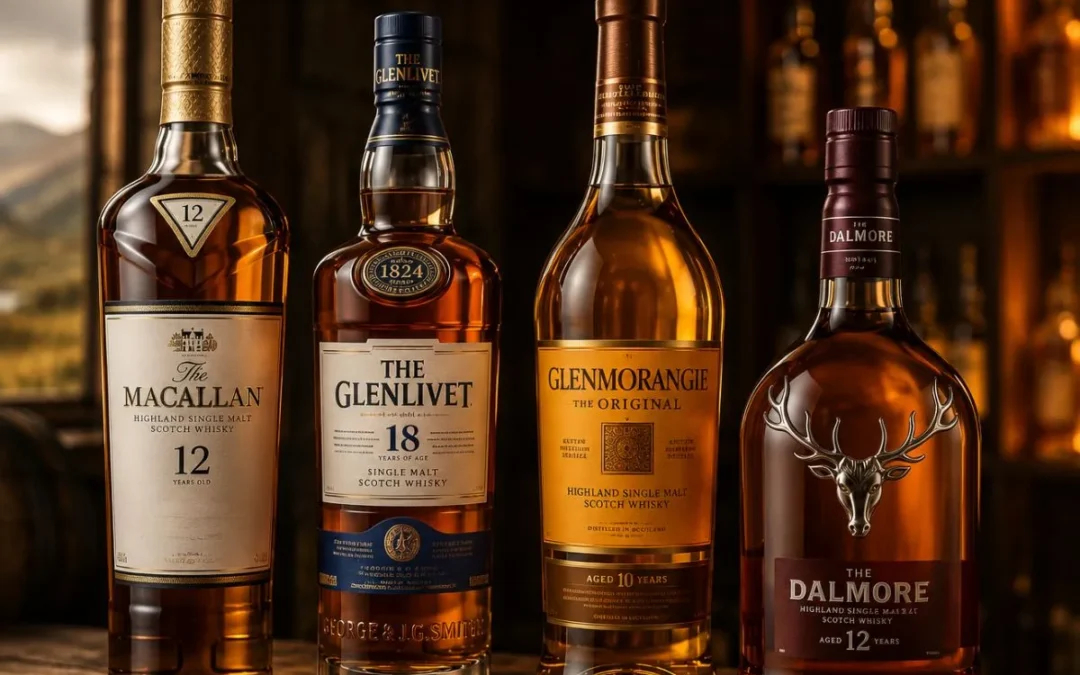
All About Highland Whisky: Everything You Need
Ask any Scotch drinker to name their favorite region, and there’s a good chance Highland whisky comes up first. It’s not hard to see why. The Highlands cover more ground than any other whisky-producing area in Scotland, stretching from the windswept coast to the edge of the Cairngorms, and that sheer size means the whisky made there refuses to sit in one neat box. If you’ve ever wondered why one Highland dram tastes like honeyed fruit and another leans smoky and coastal, this guide will walk you through what makes the region tick, how the whisky is made, and how to choose a bottle you’ll genuinely enjoy.
What Makes a Whisky “Highland”?
Technically, any single malt Scotch produced within the Highland boundary — one of Scotland’s five official whisky regions — earns the label. But that boundary is enormous, running from just north of Glasgow all the way up to the northern coast, and looping around to include parts of the east and west as well. Because of that scale, “Highland whisky” isn’t really one style. It’s an umbrella covering distilleries with wildly different climates, water sources, and traditions.
That’s actually the region’s biggest strength. Where Speyside built its reputation on a fairly consistent, fruit-forward house style, and Islay became famous for peat smoke, the Highlands never settled into a single identity. Distillers here have had the freedom to experiment, which is part of why the region produces some of the most diverse whisky in Scotland.
The Flavor Spectrum: East, West, and North
Understanding Highland whisky gets much easier once you break it down geographically.
Eastern Highland distilleries, closer to Speyside, tend to produce lighter, more elegant whiskies with notes of honey, orchard fruit, and a gentle maltiness. These are often a great entry point if you’re new to single malts.
Western Highland whiskies frequently pick up a touch of coastal character — sea air, brine, sometimes a whisper of peat — thanks to their proximity to the Atlantic and the sea lochs that dot the coastline.
Northern Highland malts often sit somewhere in between: robust and full-bodied, with warming spice, dried fruit, and occasionally a light smokiness that never overwhelms the whisky’s core sweetness.
This range is exactly why Highland whisky rewards exploration. You could spend years working through the region and still find new flavor combinations you haven’t tasted before.
How Highland Whisky Is Made
The production process follows the same broad steps as any single malt Scotch — malting barley, mashing, fermenting, double distilling in copper pot stills, then aging in oak casks for a minimum of three years, though most Highland whiskies rest considerably longer. What sets the region apart is everything around that process: the water drawn from Highland lochs and streams, the local climate that shapes how the spirit matures in the cask, and the individual quirks each distillery brings to its stills and warehouses.
Cask choice plays an especially big role in Highland whisky’s character. Ex-bourbon casks tend to bring out vanilla and light citrus, while ex-sherry casks contribute deeper notes of dried fruit, chocolate, and spice. Many distilleries use a combination of both, or finish their whisky in a second cask type for the final stretch of maturation, adding another layer of complexity.
Why Highland Whisky Is a Great Choice
If you’re building out a home bar or just starting to explore single malts, Highland whisky is one of the smartest places to begin. Its sheer variety means there’s genuinely something for everyone — whether you prefer something light and floral, rich and sherried, or lightly smoky. It also tends to be versatile at the table, pairing well with everything from smoked salmon to dark chocolate, and it holds its own in classic whisky cocktails without being wasted on ice and soda.
One of the most iconic names to explore here is Highland Park, based on Orkney at the very northern edge of the region. Known for balancing honeyed sweetness with gentle smoke and heather notes, it’s a great example of just how much character a single Highland distillery can pack into a bottle — you can browse the full range on our Highland Park collection page.
How to Taste It
Pour a measure into a tulip-shaped glass and give it a minute before your first sip — this lets the aromas open up. Nose it gently, then taste, letting the whisky rest on your palate rather than swallowing immediately. Notice how the flavor shifts from the first sip to the finish; a well-aged Highland malt often reveals new notes the longer it sits in the glass. A small splash of water can help release additional aroma without diluting the experience.
Choosing Your Bottle
Because the Highlands cover so much stylistic ground, it helps to think about what you already enjoy before buying. If you like fruity, easy-drinking whiskies, look toward the eastern distilleries. If you’re drawn to something with a bit of coastal edge or gentle smoke, western and northern expressions are worth exploring. And if you’re still finding your footing with Scotch more broadly, our Scotch Whisky Guide breaks down every region, cask type, and buying tip you’ll need to shop with confidence.
Final Thoughts
Highland whisky doesn’t ask you to commit to one flavor profile — it hands you an entire spectrum and lets you find your own favorite corner of it. That diversity, paired with centuries of distilling tradition, is exactly what keeps whisky lovers coming back to the region again and again. Wherever you land on the map, there’s a Highland dram waiting to become your new go-to.
























Recent Comments