

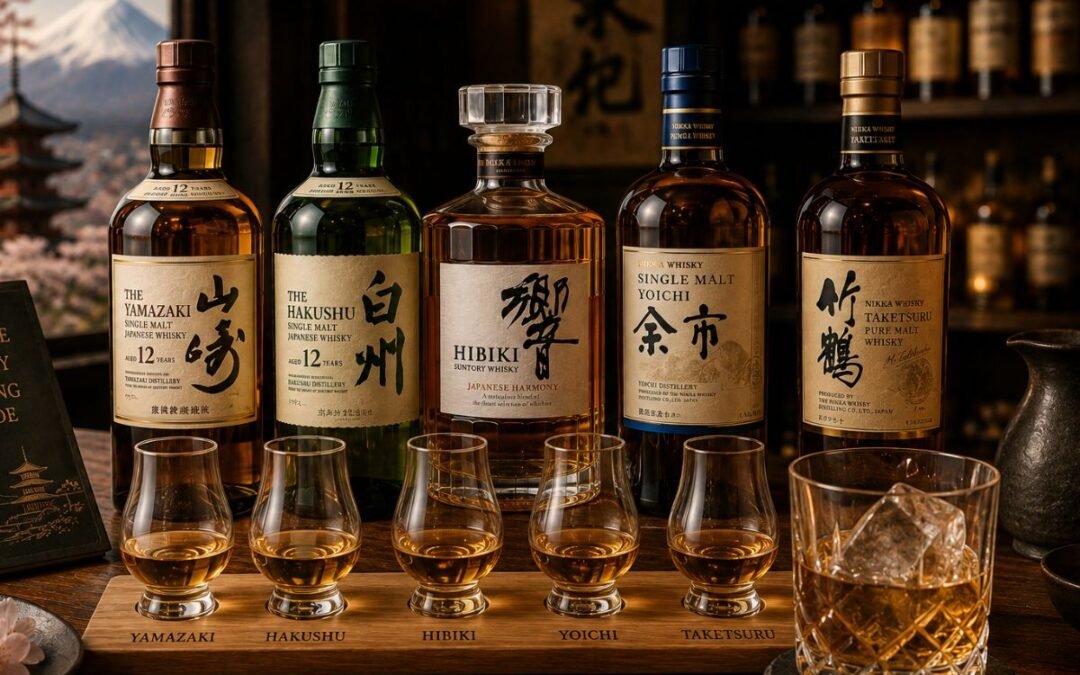
Japanese whisky is known for its balance, precision, and layered character. Yet tasting whisky is about more than simply taking a sip. By paying attention to appearance, aroma, texture, flavor, and finish, beginners can learn to identify subtle differences between bottles and develop a more confident palate.
This guide explains how to taste whisky step by step, recognize common flavor families, and understand what different aromas can reveal about a dram.
What Is Japanese Whisky?
Japanese whisky is whisky produced in Japan using carefully controlled production methods. Japanese distillers have developed a distinctive approach influenced partly by traditional Scotch whisky techniques while creating their own styles.
The category can include malt, grain, and blended expressions. Depending on the distillery, maturation, and cask selection, a whisky may offer delicate floral notes, fresh fruit, spice, vanilla, oak, smoke, or richer dessert-like flavors. If you’d like to understand how Japanese whisky compares to Scotch, bourbon, and other major styles, take a look at our complete guide to whisky types.
How Do You Taste Whisky Properly?
A structured tasting involves five basic stages:
- Look at the whisky.
- Smell the aroma.
- Taste a small amount.
- Evaluate the texture and development.
- Consider the finish.
There is no single “correct” tasting vocabulary. Your personal impressions matter. The goal is to notice what you experience rather than trying to identify a flavor perfectly.
Step 1: Examine the Appearance
Pour a small amount into a suitable whisky glass and hold it against a light background.
What Should You Look For?
Observe:
- Color
- Clarity
- Brightness
- Viscosity
Color can range from pale gold to deep amber. While appearance can offer clues about maturation and cask influence, it does not tell you exactly how a whisky will taste.
A whisky’s legs, or the streaks that form along the glass after swirling, may indicate viscosity, but they should not be treated as a reliable indicator of quality.
Step 2: Explore the Aroma
Smelling is one of the most important parts of tasting. Much of what people perceive as “flavor” actually comes through the sense of smell.
With Japanese whisky, begin by holding the glass slightly away from your nose. Take a gentle sniff rather than inhaling deeply. This helps prevent strong alcohol vapors from overwhelming more delicate aromas.
Look for Fruit Notes
You may notice aromas such as:
- Apple
- Pear
- Peach
- Citrus
- Dried fruit
- Tropical fruit
Fruit aromas can range from bright and fresh to cooked, dried, or candied.
Identify Floral and Herbal Notes
Some whiskies may present lighter aromas such as flowers, grass, herbs, or green tea. These characteristics can contribute to an elegant and refreshing profile.
Search for Sweet Aromas
Vanilla, caramel, honey, toffee, chocolate, and baking spices can develop through maturation and cask influence.
Don’t worry if you cannot identify an exact ingredient. If the aroma reminds you of something sweet, woody, fruity, or floral, that observation is useful.
Step 3: Take a Small Sip
Once you have explored the aroma, take a small sip and allow the whisky to move across your palate.
The first impression may be different from what you smelled. Pay attention to sweetness, acidity, spice, bitterness, alcohol warmth, and overall balance.
With Japanese whisky, you might encounter flavors ranging from orchard fruit and citrus to vanilla, oak, spice, malt, or subtle smoke.
Ask Yourself Three Questions
What do I taste first?
This is the opening impression.
What develops next?
Some whiskies reveal additional flavors after several seconds.
What remains afterward?
The lingering flavors contribute to the finish.
Step 4: Evaluate the Texture
Flavor is only part of the experience. Texture can change how a whisky feels in your mouth.
A whisky might seem:
- Light and delicate
- Creamy
- Silky
- Oily
- Full-bodied
- Dry
Texture should not be confused with quality. A lighter whisky can be just as carefully crafted as a rich, full-bodied expression.
Step 5: Study the Finish
The finish is what remains after swallowing.
A short finish may disappear quickly, while a long finish can continue developing for a significant period.
Notice whether the ending is sweet, spicy, smoky, fruity, woody, dry, or warming. A whisky may also transition from one character to another during the finish.
For example, a sip might begin with fresh fruit before developing vanilla and ending with gentle oak spice.
What Flavors Are Common in Whisky?
Understanding broad flavor categories makes tasting easier.
Fruit
Apple, pear, citrus, peach, raisins, and other fruits can appear in different expressions.
Sweet
Vanilla, caramel, honey, toffee, and chocolate are common descriptors.
Spice
Cinnamon, ginger, pepper, nutmeg, and clove can add warmth.
Wood
Oak, cedar, toasted wood, and tannins may reflect maturation.
Smoke
Some expressions feature smoke, char, earth, or subtle peat-like notes.
Floral
Rose, blossom, lavender, and other delicate floral impressions can add complexity.
How Does the Glass Affect Tasting?
Glassware can influence how aromas reach your nose. A tulip-shaped whisky glass is often useful because its narrower opening concentrates aromas.
Avoid filling the glass too much. A small pour leaves room for aromas to collect and makes it easier to swirl gently.
Temperature also matters. Tasting at room temperature is a common starting point, but personal preference should ultimately guide how you enjoy your whisky.
Should You Add Water?
Adding a few drops of water can change the tasting experience. Water may reduce the intensity of alcohol and allow certain aromas or flavors to become easier to detect.
Try the whisky neat first. Then add a small amount of water and taste it again.
When exploring Japanese whisky, comparing the neat and diluted versions can be an interesting way to understand how aroma and flavor develop.
How Can Beginners Improve Their Palate?
Developing a palate takes practice. You don’t need to memorize complicated tasting terminology.
Start by comparing two whiskies side by side. Ask which one smells fruitier, which feels richer, and which has a longer finish.
You can also smell familiar foods and ingredients separately. Try comparing vanilla, citrus peel, apples, cinnamon, toasted nuts, or honey with whisky aromas.
Writing down your observations can make changes easier to recognize over time.
Common Tasting Mistakes to Avoid
Beginners often make a few simple mistakes.
Drinking Too Quickly
Whisky is better explored slowly. Give aromas and flavors time to develop.
Focusing on the Price
Expensive does not automatically mean better for your personal preferences.
Searching for “Correct” Answers
Tasting is subjective. If you smell pear while another person smells apple, neither interpretation is necessarily wrong.
Using Too Much Water
A few drops can be enough. Adding too much may dilute the character you’re trying to evaluate.
How Do You Describe Whisky Flavors?
A simple tasting note can follow this structure:
Aroma → First Taste → Development → Texture → Finish
For example, you might describe a whisky as having a light citrus aroma, followed by apple and vanilla on the palate, a smooth texture, and a gently spicy finish.
This structure keeps tasting notes clear without requiring complicated terminology.
The Bottom Line
Learning to taste whisky is a gradual process. Start with the senses you already understand, identify broad flavor families, and gradually become more specific.
Japanese whisky can offer an especially interesting tasting experience because different expressions may showcase fruit, floral aromas, sweetness, spice, oak, and smoke in varying combinations.
The most important rule is simple: taste slowly, pay attention, and trust your own observations. With regular practice, identifying aromas and flavors becomes easier, and each tasting can reveal something new. Ready to put your palate to the test? Explore our collection of Japanese whisky and find a bottle that matches the flavors you enjoy most.




Recent Comments